

Exams... throw out tension
Published: February 27, 2006
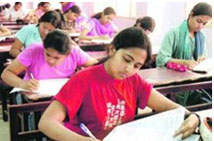 Study smart. There are techniques to spend less time with books and derive the most out of them. Guess what, even a glass of lemonade helps brain tick fast
Come March and the exam fever touches a new high. The familiar butterflies return to fly in the stomach and give the queasy feeling. Difficult subjects and topics revisit over and over again in your dreams. The more you concentrate and study hard burning the night oil they tend to filter out as fast as it enters the brain. Well, these are some common feelings before exams and people associate them with a term called `exam phobia.' To get over that phobia one needs to design his or her study schedule and techniques. Basically, a few things need to be observed and tackled to design a smart study technique. And what are they? "Memory and technique of study are the two most important factors," says A.S. Prasad, director of CTC Communication.
Memory
According to him, memory comprises three components or 3 `R's - reception, retention and recall. "Reception is the most important thing as far as the memory factor is concerned. One should make sure that the reception of data should be in the most amiable and friendly environment.''Deviating from the traditional set-up of table, chair and table lamp in a study room, he says, "One should be allowed to study in the most comfortable position and place that he or she desires. Confining one to a particular spot would lead to over concentration that at times lead to lesser reception and retention. The reception and retention would be at its peak only when the mind is open in an amiable environment. Over concentration at times might lead to closing of certain windows of mind. If one is comfortable studying with a light music in the background in the dining hall then he or she should be allowed to do so."
Change in environment
He also advocates the technique of changing the environment on a regular basis, as the same place might lead to monotony. "Study in the garden for sometime or on the terrace or bedroom. This would keep your mind relaxed, which is most essential while receiving data."As far as retention is concerned Mr. Prasad points out that more use of sensory perceptions while studying would lead to a better retention of data. "Make use of the audio, visual and kinetic senses to the optimum. Coding what you just studied into a diagram can work miracles in retaining. Association technique is another mode of retaining difficult topics. Associate the topic with some bizarre or funny incident and it would get registered in the long-term memory slot."The recall capacity would be at its peak only when the brain is in full flow in a relaxed environment. "Start the day of the exam in a happy mood. Do what you like to do the most like dancing or gardening. Do not cramp your brain by reading and reading. A light scan through the book is advisable."
Study pattern
The first and the most important things are time and duration of study. The ideal duration and time for study would be two hours in the morning between 4 and 6 a.m. and 7 to 9 p.m. in the evening. According to Mr. Prasad night study should be forbidden. "Moreover, the duration should be further broken to 25-minute sessions each with a recess of five minutes. Do some creative work during the five minutes sipping a glass of lemonade, as creativity and glucose would enhance right and left brain integration," says he.
SQ-3R technique
Survey, question- read, review and recall (SQ-3R) is an old proven technique but holds good even today. Survey what is to be read first, then apply questions like why you want to read and how would it benefit, give it a casual reading, review once again and finally close the book and recall what you have read. "Keyword reading is another technique that one can incorporate at the reading stage. Mark the key words in a paragraph and this would help while reviewing and recalling," adds Mr. Prasad. RevisionThe best revision pattern would be 10 minutes immediately after reading, one day later, one week later and finally after one month. This pattern would lodge the data in the long- term memory slot.
SUMIT BHATTACHARJEE
Back